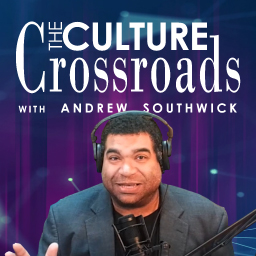




Thanksgiving Origins and History: Unveiling the Truth with Pastor Paul Blair and R.C. Williams
Andrew began by sharing the story of how the idea for Thanksgiving came about, attributing it to a woman named Sarah Josepha Hale. Thanksgiving, Andrew explained, was intended to be a unifying occasion for all Americans to celebrate their shared national heritage.
Pastor Paul Blair then took center stage, bringing the true history of Thanksgiving to life. He emphasized the role of the Bible in the first Thanksgiving and criticized modern and recent history books for distorting the Thanksgiving story. According to Pastor Paul, the early pilgrims and the first Thanksgiving were instrumental in shaping the blueprint for the U.S. Constitution and the Declaration of Independence.
In summary, today's episode of Culture Crossroads highlighted the origins of Thanksgiving, its purpose as a unifying celebration, and its historical significance in the development of the United States. It also underscored the role of Sarah Josepha Hale in proposing the idea for Thanksgiving and the influence of the Bible on this pivotal moment in American history.
More about Sarah Josepha Hale:
Hale, an influential 19th-century writer and editor, played a pivotal role in the establishment of Thanksgiving as a national holiday in the United States. Her influence, however, was more social and cultural rather than directly religious or biblical. Here are some key points about her involvement in proposing the idea for Thanksgiving:
- Campaign for a National Holiday: Hale is best known for her persistent campaigning to have Thanksgiving declared a national holiday. She was the editor of "Godey's Lady's Book," a widely read magazine in the 19th century, which she used as a platform to advocate for a national day of thanks.
- Letters to Presidents: Over several decades, Hale wrote numerous letters to U.S. Presidents advocating for Thanksgiving to be recognized as a national holiday. She believed that a national day of gratitude would unite Americans and provide a sense of national identity and unity.
- Success with Lincoln: Her efforts finally bore fruit during the presidency of Abraham Lincoln. In 1863, partly influenced by her persistent lobbying, Lincoln proclaimed a national day of Thanksgiving to be celebrated on the last Thursday in November.
- Influence of the Bible: While Hale’s campaign for Thanksgiving was not explicitly rooted in biblical teachings, the concept of thanksgiving and gratitude is a significant theme in the Bible. It is likely that her Puritan New England upbringing, where biblical values were deeply ingrained, played a role in her views on gratitude and thanksgiving.
- Thanksgiving as a Civic, Not Religious Holiday: Hale’s vision of Thanksgiving was more as a civic holiday rather than a religious one. She envisioned a day where Americans from all backgrounds could celebrate and give thanks for the blessings of the year. This included aspects of community, family, national prosperity, and unity.
- Other Contributions: Apart from her advocacy for Thanksgiving, Sarah Josepha Hale was an important figure in American literature and culture. She was an author, poet, and an advocate for women's education. She is also known for writing the nursery rhyme "Mary Had a Little Lamb."